Black history is American history.
As the (white/Latina) mom of a mixed African American 15-year-old who attends public school here in NYC, I’m the first person to shout it: Black history is American history. Black studies are American studies.
 I have not read the “traditional” (i.e., Western European) literary canon, but I have read Maya Angelou, William Wells Brown, Ralph Ellison, Tony Morrison, James Baldwin, Chinua Achebe, Octavia Butler, Zora Neale Hurston, Paul Laurence Dunbar, W.E.B. Du Bois, Ishmael Reed, Sherley Anne Williams, Alice Walker, Tayeb Salih, and now Bryan Stevenson, Edwidge Danticat, the Breakbeat Poets, MG Vassanji, Chimamanda Ngozi Adichie, Kevin Young, Tomi Adeyemi, bell hooks, Danez Smith, Ta-Nehisi Coates, and adrienne maree brown.
In my read of our nation’s history,
Black Americans built this nation through their stolen labor.
I cannot know the truth of who and what our nation is and does (politically) without educating myself about the Black American experience.
Black Americans are the creators of what many call the only true American musical forms.
I could go on…
All amazing reasons to recognize that Black history is American history.
But Black Americans are also irreplaceable members of the American family who create, infuse, respond to and evolve our culture. To deprive ourselves—as Americans—of a conscious knowledge of Black experience, thought, art, joy (yes, pain, too), ingenuity and creativity is to deprive ourselves of fully knowing who we are. Because we are—all—shaped by hundreds of years of Black cultural expressions, contributions, experiences and reflections. Black Americans have integral, irreplaceable and invaluable insight into American reality. And America needs it.
African American literature hasn’t just taught me about Black culture or history in America—it shows me who America really is, what America really holds dear.
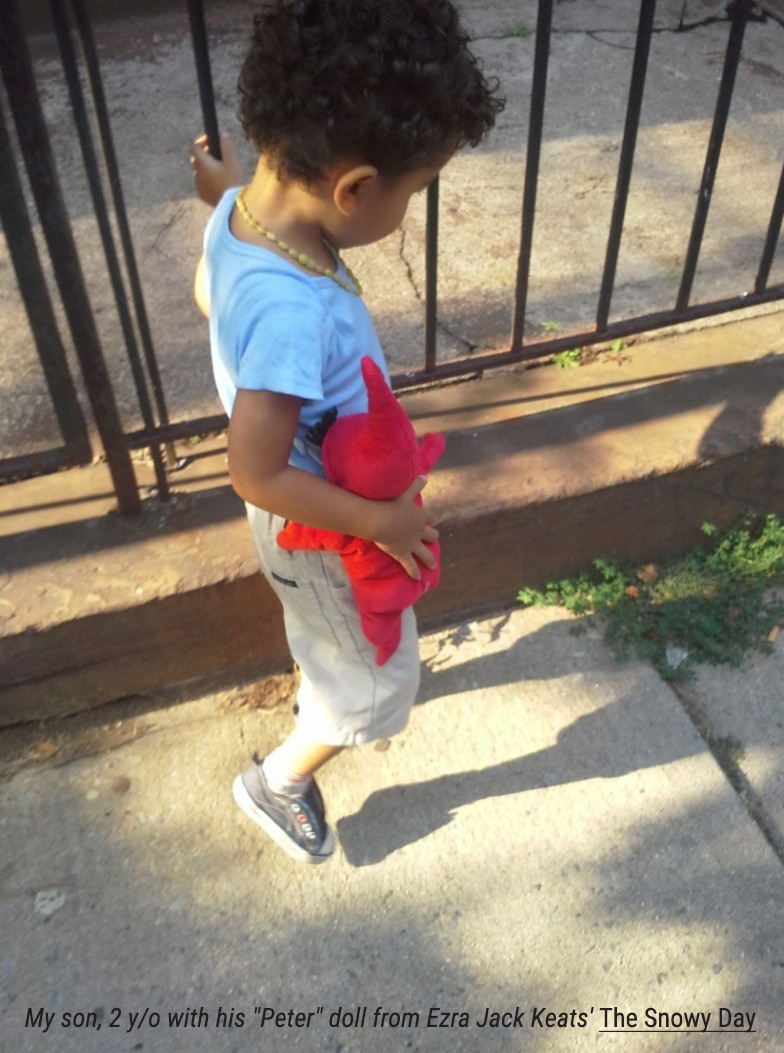
But it’s also so much more. My son is America—Black, white and Indigenous—“literally and figuratively,” as he would say. How can I be his mother, raise him (“grow him up” as he said at just four years old the night before his first day of kindergarten), honor him and his world, without Black culture?
Black literature, art, music and thought prepared me to know that when my son was born, and he became the sole purpose of my motherhood, I must change, I must be lead, and I must align and shepherd in all new ways. It prepared me to recognize that what should have been human rights were re-marketed as (white) privileges in order to withhold them from my son—and millions of other Black, brown and beige people. It prepared me to recognize the schools’ devastatingly low (even when subtle) expectations for and treatment of him—and the vast gap between his school experience and mine. It also provided hundreds of years of Black parenting examples from which I personally had no genetic lineage—and must now learn.
And African American studies presented me with alternatives to a hegemonic, colonial culture I wanted no part of anyway, but now must tenaciously combat—for us both.
James Baldwin: “To be a Negro in this country and to be relatively conscious is to be in a rage almost all the time.” à The racism of America is omnipresent. For those subjected to it, it is always everywhere, lurking. So, healing will always be required. In everything, everywhere. Especially at school.
Octavia Butler: “God is change.” à So, change. And do so consciously. Plant the medicine tree. In all things.
Cornel West: “Justice is what love looks like in public, just like tenderness is what love feels like in private.” à If America will have justice, she must grow love. So love. All the ways. Tenderness at home for my son, and justice at school. And love at school, too.
Zora Neale Hurston: “Sometimes, I feel discriminated against, but it does not make me angry. It merely astonishes me. How can any deny themselves the pleasure of my company? It’s beyond me.” à Indeed, to miss out on the joy, beauty, genius and humor of Black culture would be a travesty. As would it be not to know my son the comic. As so many Haïtians taught me time and again (my family lived in Port-au-Prince 1996 – 1997), celebrate everything that can be celebrated. And celebrate my son constantly. Make him believe in a world where his joy is cherished.
“I love myself when I am laughing. . . and then again when I am looking mean and impressive.” à Laugh, be bold and lead. No one makes me laugh like my son, “the little philosopher,” and I’ll never let him forget it. With every laugh he brings a truth we all need, perhaps most of all—me.
As we move from Black History Month to Women’s History Month let’s be sure to celebrate all that Black Americans give all of America.
The truth will not just set us free. We will be better for it. Together we can build a world where inclusion, belonging and relationship make a reality far better than we have yet known. For every child.